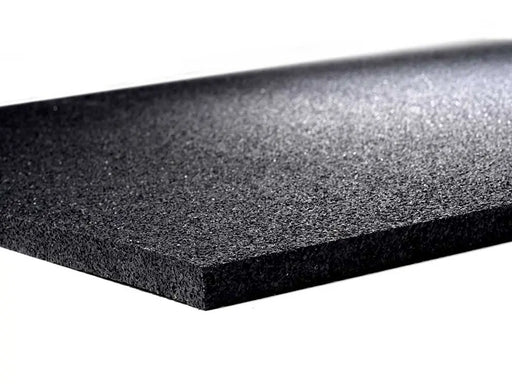
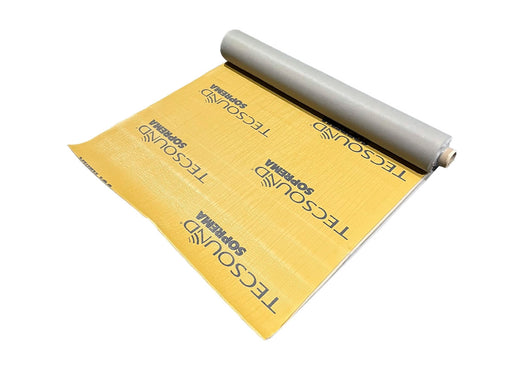
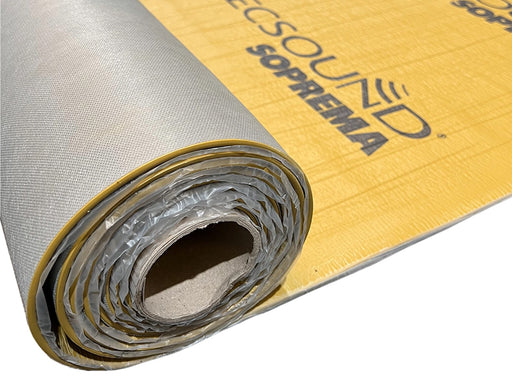
SonicScreed is a high-performance acoustic rubber mat engineered to reduce both impact and airborne sound transmission in floor constructions designed to meet the requirements of Approved Document E (Resistance to the Passage of Sound). Suitable for use in residential and multi-occupancy buildings, SonicScreed is commonly installed as a resilient layer or underscreed solution within compliant floor build-ups.
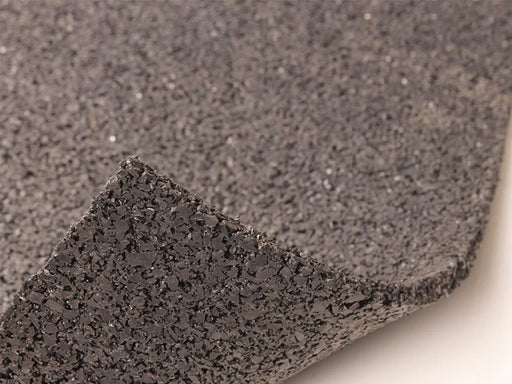
Manufactured from carefully selected recycled rubber and PUR-bonded for long-term durability, SonicScreed provides reliable acoustic performance while maintaining excellent load-bearing capacity and resilience. Its versatility makes it ideal for new-build and refurbishment projects where robust, repeatable acoustic performance and regulatory compliance are required.
What does SonicScreed Acoustic Underscreed Do?
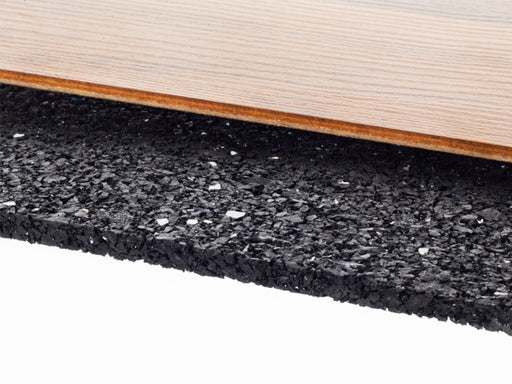
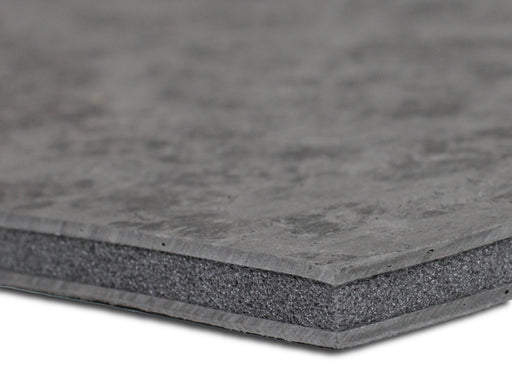
SonicScreed is a high-performance rubber acoustic underscreed engineered to reduce both impact and airborne sound transmission through floor constructions. Manufactured from PUR-bonded recycled rubber at a density of 750 kg/m³, it is laid as a resilient acoustic layer directly over the structural slab before the floor screed is poured. The result is a true floating floor that isolates the screed and finish from the base structure, breaking the direct transmission path for footfall, furniture movement and other impact noise into the rooms below.
How a rubber underscreed improves soundproofing
In a floor without acoustic separation, impact energy from footfall and dropped objects passes almost unimpeded through the screed into the structural slab, re-radiating as airborne noise in the dwelling below. A rubber acoustic underlay beneath the screed introduces a low-stiffness resilient layer that decouples the screed from the slab. This decoupling sharply reduces impact sound transmission (ΔLw) and also improves weighted airborne sound reduction (Rw) across the floor plate. SonicScreed's high-density recycled rubber composition delivers the low dynamic stiffness required to perform across the 100–3150 Hz range specified in ISO 717-2, including the low-frequency footfall band where thinner foam underlays typically underperform.
Performance and specification
SonicScreed is supplied in 8 mm and 17 mm thicknesses: 8 mm where build-up height is constrained, and 17 mm for higher acoustic performance in apartments, hotels and premium residential schemes. Acoustic performance is comparable to market-leading rubber underscreeds such as Regupol Sonus Curve, making SonicScreed a direct specification alternative where the same floor detail has already been designed. Rolls measure 8 m × 1.2 m (8 mm) and 5 m × 1 m (17 mm). Because the product is manufactured from post-consumer recycled tyre rubber, it also contributes to embodied-carbon and circular-economy targets under BREEAM and comparable sustainability frameworks.
Approved Document E and Part E compliance
SonicScreed is designed to support compliance with Approved Document E of the Building Regulations, which sets minimum standards for the resistance to the passage of sound between dwellings. Used as the resilient layer within a correctly detailed separating floor — concrete, timber or hybrid — it helps the finished construction meet Part E targets for impact and airborne performance, whether verified by pre-completion sound testing or by adopting a Robust Details specification.
Installation
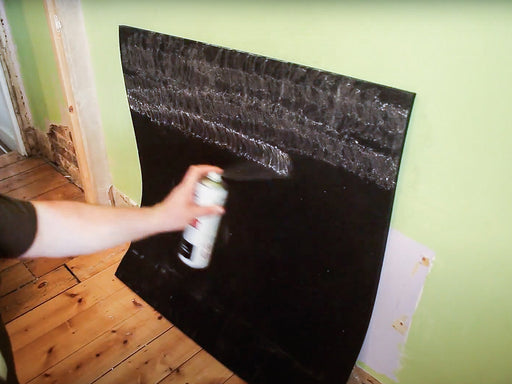
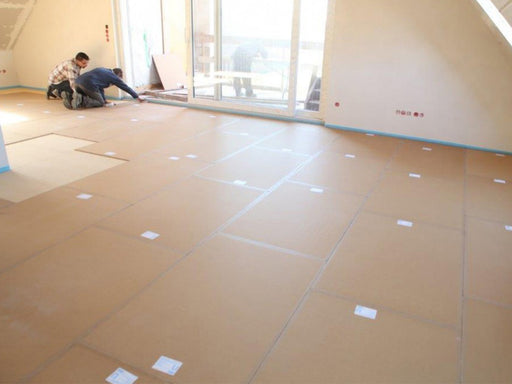
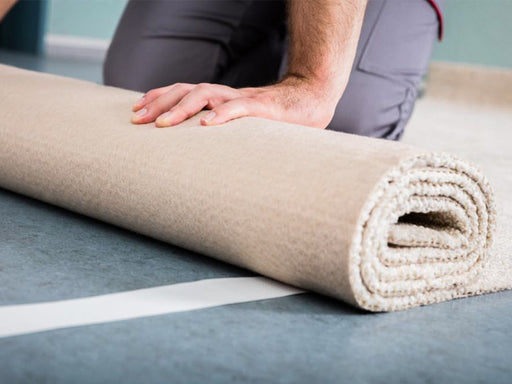
The underscreed is loose-laid directly onto a clean, level substrate, with rolls butted tightly and joints sealed with acoustic tape. A flanking strip is turned up at every wall, column and service penetration to prevent acoustic bridging between the floating screed and the surrounding structure. A polythene slip-membrane is laid over the rubber before sand-cement or liquid screed is poured. Once cured, the screed floats entirely on the resilient layer, delivering long-term acoustic separation for the lifetime of the building — the core reason rubber underscreed is specified as the resilient layer of choice in UK new-build and refurbishment projects.
Installing SonicScreed underscreed is a process designed to isolate a concrete screed from the structural floor, providing the structure with impact sound insulation. The process involves preparing the subfloor, laying the membrane, sealing joints, and turning the material up at the edges to prevent sound bridging/flanking.
1. Preparation
- Subfloor Condition: The concrete subfloor must be dry, clean, level, and free from debris.
- Acclimatization: Allow the SonicScreed rolls to relax on the floor, especially if stored in cold temperatures.
- Perimeter Strip: Install a flanking strip around the entire perimeter of the room to isolate the screed from walls.
2. Installation of SonicScreed Acoustic Underscreed
- Positioning: Lay the SonicScreed, typically with the scooped face down and the flat side facing up.
- Butt Joints: Butt the edges of the SonicScreed rolls tightly together, ensuring there are no gaps.
- Turn-Up: Ensure the membrane turns up at all vertical wall edges to a height above the finished screed level.
3. Sealing and Securing
- Tape Seams: Seal all joints using high-quality adhesive tape to create a continuous barrier, ensuring no screed can leak through and bridge the structure.
- Adhesive (Optional): If needed, use an approved adhesive to secure the mat to the subfloor.
4. Screed Application
- Pouring: Pour the screed directly over the acoustic membrane, ensuring the material is not punctured or damaged.
- Bridging Check: Ensure no part of the screed touches the walls or subfloor, as this will create acoustic bridges.
Summary Tips
- Use Two People: The SonicScreed rolls are heavy and difficult to manage alone.
- Keep it Continuous: A continuous membrane without gaps is essential for effective soundproofing.
- Trim Excess: Once the screed is fully cured, you can trim any excess flanking strip or membrane that protrudes above the floor level.